Best Seasons to Visit Eastern Hokkaido
Spring: Late Blooms & New Life

Spring comes slowly to Eastern Hokkaido. Unlike mainland Japan, the region stays cold well into April—snowfall in March isn’t uncommon, and patches of snow often linger into early spring. Mornings and evenings remain chilly, so layered clothing is a must.
As the land awakens from its long winter, fresh greenery and wildflowers emerge, bringing a palpable sense of renewal.
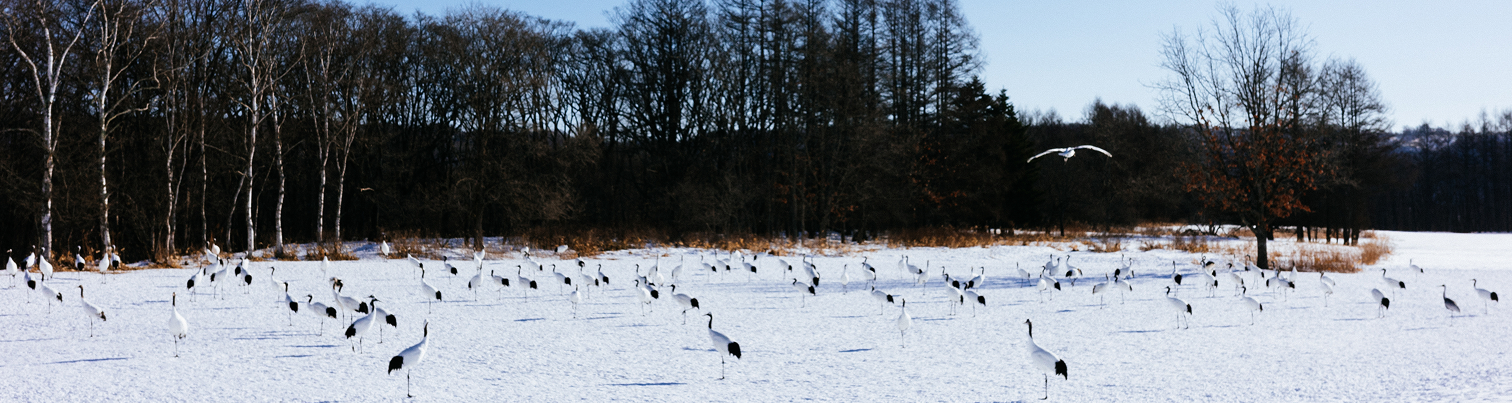
Wildlife becomes more active too. If you’re lucky, you might spot red-crowned cranes (tancho) leading their newly hatched chicks through wetland grasses.
Summer: Cool Air & Active Days

Summer in Eastern Hokkaido is refreshingly mild—especially compared to the rest of Japan. While inland areas like Kitami can get warm during the day (above 25°C), coastal regions stay cool and pleasant. Evenings can be brisk, so a light jacket is always good to have.
This short but glorious season offers a wide range of outdoor activities: hiking and trekking, birdwatching, canoeing, horseback riding, fishing, cycling, and scenic cruises. It’s the perfect time to explore without the crowds or humidity common elsewhere in Japan.
Autumn: Crisp Skies & Fiery Leaves

Autumn brings more dramatic weather shifts and increased rainfall, but it also signals the start of some of the region’s best sightseeing. Coastal areas prone to summer fog often clear up, revealing crisp, blue skies and vivid landscapes.
From late September into October, Eastern Hokkaido’s forests burst into brilliant red, orange, and gold. The dry, sunny days typical of Hokkaido autumns make it ideal for trekking, canoeing, or cycling through vibrant scenery that feels entirely different from summer.
Winter: Ice, Wildlife & Crystal Skies

Despite the low temperatures, winter in Eastern Hokkaido often means clear skies and magical light. Snowshoeing, ice fishing, winter canoeing, and drifting ice adventures—whether by cruise, walking tour, or fat bike—let you immerse yourself in a frozen world that feels like a dreamscape. This is also peak season for rare raptors like Steller’s sea eagles and white-tailed eagles, which migrate here to overwinter along the coasts and frozen rivers.
Dress warmly with a thick down jacket, thermal layers, insulated snow boots, gloves, and ideally goggles or a face mask to block cold winds—and you’ll be rewarded with one-of-a-kind experiences.
Seasonal Wildlife & Wildflower Calendar
1.Seasonal Wildlife Calendar
What to See and When
For mobile users: swipe left or right to view the entire table.
| Jan | Feb | Mar | Apr | May | Jun | Jul | Aug | Sep | Oct | Nov | Dec | |
|---|---|---|---|---|---|---|---|---|---|---|---|---|
|
Orca (Killer Whale) |
M | H | H | H | H | H | M | |||||
| Harbour / Spotted Seal |
H | H | H | |||||||||
| Steller’s Sea Eagle |
H | H | H | H | ||||||||
| White-tailed Eagle |
H | H | H | H | M | M | H | H | H | |||
| Red-crowned Crane |
H | H | H | H | H | H | H | H | H | H | H | H |
| Hokkaido Sika Deer |
H | H | H | H | H | H | H | H | H | H | H | H |
| Hokkaido Red Fox |
H | H | H | H | H | H | H | H | H | H | H | H |
| Brown Bear | M | H | H | H | H | H | H | M | ||||
| Whooper Swan | H | H | M | M | H |
M … Moderate chance
For mobile users: swipe left or right to view the entire table.
| Species | Best Viewing Spots | Features |
|---|---|---|
| Drift Ice | Abashiri (Ryuhyo Museum / Cruise) / Rausu (Ice-breaking Boat) | Sea ice along the Okhotsk Coast from late Jan to Mar |
|
Orca (Killer Whale) |
Offshore Rausu (Whale Watching Boats) | Seen May–Aug; most frequent in June |
| Harbour / Spotted Seal | Notsuke Bay / Nemuro Coast | Often visible on ice floes or sandbanks in winter |
| Steller’s Sea Eagle | Rausu Fishing Port / Lake Furen | Winter visitor from Russia; best seen Jan–Mar |
| White-tailed Eagle | Kushiro Wetland / Notsuke / Lake Furen | Resident species with wide distribution year-round |
| Red-crowned Crane | Kushiro Wetland / Tsurui Village | Non-migratory; courtship dances in winter are iconic |
| Hokkaido Sika Deer | Shiretoko (all areas) / Nemuro Peninsula | Frequently encountered near roads and fields |
| Hokkaido Red Fox | Across Eastern Hokkaido | Very common, often spotted in early morning or at dusk |
| Brown Bear | Shiretoko Coast (Boat Tours) / Mt. Rausu Area | Most active May–Sep; seen from sea or hiking routes |
| Whooper Swan | Lake Kussharo / Lake Tofutsu | Winter migrants; seen on open water and fields |
2. Seasonal Wildflower Calendar
Bloom Highlights Across the Year
For mobile users: swipe left or right to view the entire table.
| Flower / Month | Apr | May | Jun | Jul | Aug | Sep | Oct |
|---|---|---|---|---|---|---|---|
| Orange Daylily | P | P | P | ||||
| Rugosa Rose | E | P | P | P | L | ||
| Cotton Grass | E | P | P | ||||
| Jacob’s Ladder | P | P | L | ||||
| Shiretoko Violet | L | P | |||||
| Glasswort | L | P | |||||
| Gentian | P | P | |||||
| Butterbur | P | P | L |
E/L … Beginning / end of season
Best Viewing Spots
Where to See These Wildflowers
For mobile users: swipe left or right to view the entire table.
| Flower | Best Viewing Spots | Features |
|---|---|---|
|
Orange Daylily (Ezo Kanzo) |
Notsuke Peninsula / Kiritappu Wetland | Large orange colonies along coastal grasslands and wetlands |
|
Rugosa Rose (Hamanasu) |
Koshimizu Primeval Flower Garden / Ochiishi Cape / Notsuke | Fragrant pink flowers on sandy coastlines |
|
Cotton Grass (Watasuge) |
Kiritappu Wetland / Kushiro Wetland (Onnenai Boardwalk) | White fluff swaying in wetland breeze |
|
Jacob’s Ladder (Ezo Fuji) |
Highland trails around Lake Mashu / Mt. Mokoto area | Alpine flower with violet-blue color, seen along trails |
| Shiretoko Violet | Shiretoko mountain trails (Rausu-dake, Iou-zan) | Endemic species, found only in Shiretoko’s alpine zones |
|
Glasswort (Akkeshisou) |
Lake Notoro (Abashiri) / Lake Akkeshi | Bright red carpets in autumn—“coral grass” effect |
|
Gentian (Ezo Rindou) |
Kiritappu Wetland / Mt. Mokoto surroundings | Deep blue flowers marking the start of Hokkaido’s autumn |
|
Butterbur (Fuki) |
Forest edges in Mashu / Kawayu / Rausu | Tall leafy plant; edible stalks, early spring blooms |
Plan Your Trip




Destinations
Things to Do
Plan Your Trip